Embroidery, screen print and DTF
Three ways to put your brand on a garment, and how to choose the right one.
Custom embroidery
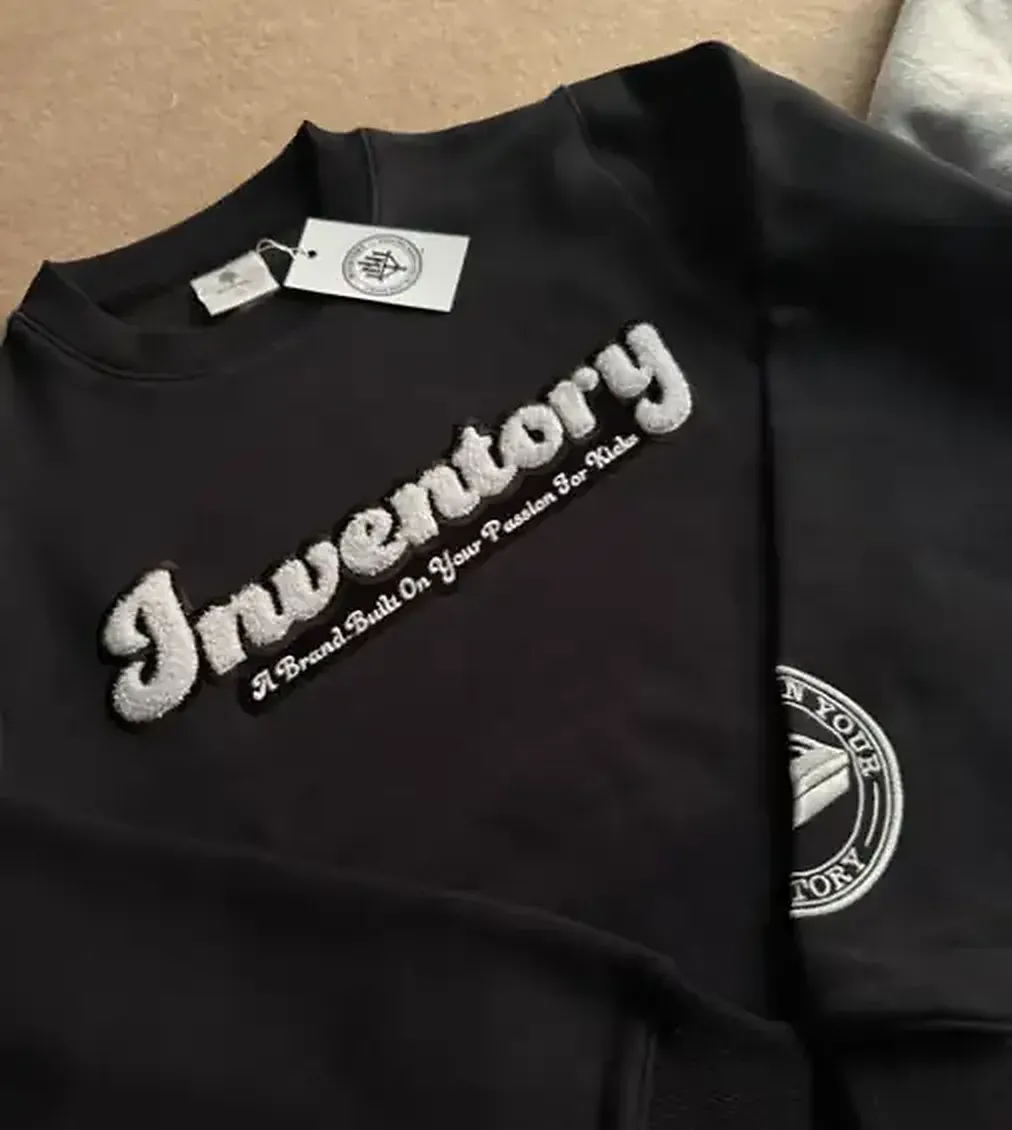
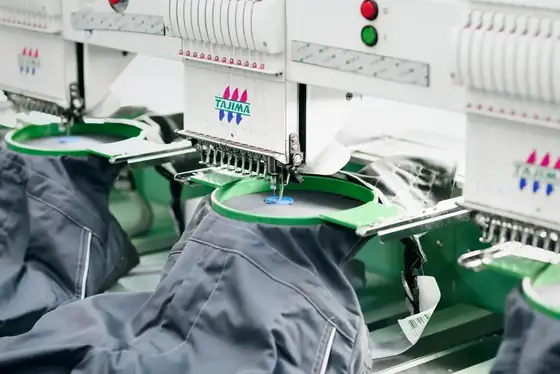
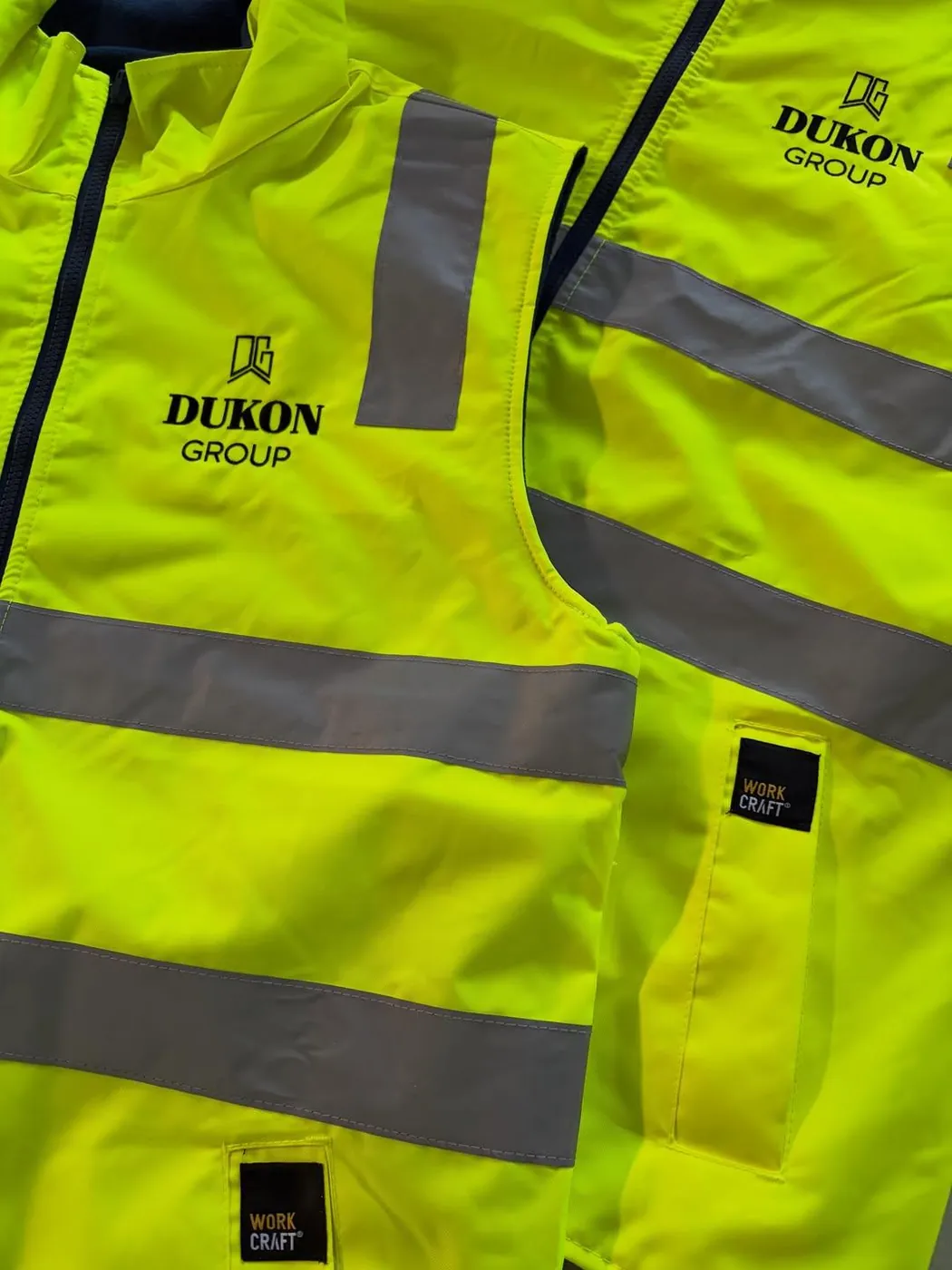
Embroidery stitches your logo into the fabric with coloured thread. It gives a raised, textured finish that reads as premium and survives repeated washing without cracking, peeling or fading. It is the first choice for work shirts, jackets, vests, caps and uniforms.
Complexity is measured in stitch count. Our art team digitises your artwork into a stitch file and sends a digital proof for approval before production. Keep the digitised file for every future order.
Flat embroidery
The standard, most versatile stitch. Handles text and detailed logos cleanly.
3D puff
Foam under the thread lifts letters and shapes off the cap or jacket.
Patches and twill
Embroidered patches, and tackle twill appliqué for large letters and numbers.
Metallic and chenille
Metallic thread for shine, chenille loops for a tactile varsity look.
Fine detail needs care in thread. Very thin lines and tiny text may not stitch cleanly, so keep lettering about 6 mm tall or larger. We will tell you if a design needs simplifying.
Screen printing
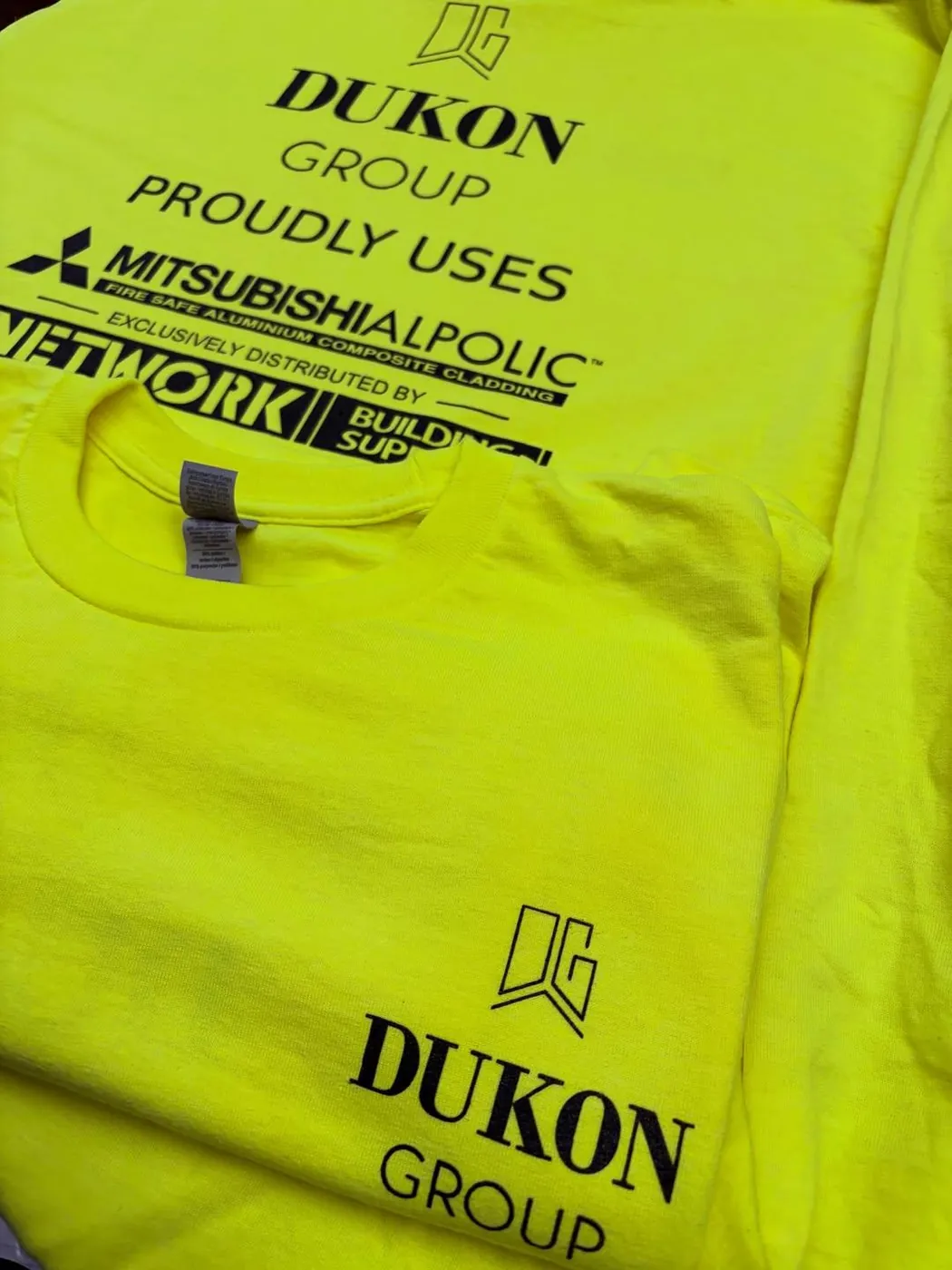
Ink is pushed through a stencil on a mesh screen, one screen per colour. The result is a bold, durable print that is cost-effective on larger runs of tees, hoodies and crewnecks, especially for designs with a few solid colours.
Dark garments get a white underbase so colours stay bright. Place the print on the front chest, full front, full back, left chest or sleeve, or ask us for something less usual.
Plastisol
Thick, opaque and very durable. Best for bold graphics on light or dark fabric.
Water-based and discharge
Soaks into the fabric for a soft, worn-in feel and a lower environmental impact.
Four-colour process
Cyan, magenta, yellow and black layers for photographic or gradient artwork.
Specialty inks
Metallic, puff, glitter and reflective finishes, confirmed before ordering.
DTF printing
Direct-to-film prints your design onto a film with full-colour ink, then heat-presses it onto the garment. There are no screens and no colour separations, so it suits complex artwork, gradients, photos and small runs.
Unlike direct-to-garment printing, DTF also works on polyester, nylon and blends, which makes it a fit for activewear and performance fabrics. A white ink layer is built in, so dark garments stay vivid.
Choose DTF when
You need a very small run, many colours, a photo, full colour on a dark garment, or a print on synthetic fabric.
Choose screen print when
You are ordering larger quantities with simple, solid-colour artwork.
Which method fits?
| Method | Best for | Colours | Fabrics | Feel |
|---|---|---|---|---|
| Embroidery | Uniforms, workwear, caps | Thread colours | Most garments | Raised, textured |
| Screen print | Larger runs, bold logos | Per-screen colours | Cotton and blends | Smooth, slightly raised |
| DTF | Small runs, complex art | Full colour | Cotton, polyester, nylon | Smooth, flexible film |
Production takes 7 to 35 business days depending on order size and styling. Minimums are 10 pieces for team jerseys and 50 pieces for other custom styles. Pricing is quoted per order.
Embroidery and puff print
Related guides
Embroidery vs. Screen Print vs. DTF: Best Decoration for Workwear
Compare wash durability, colour range and fabric fit for the three most common logo methods.
How to Prepare Vector Artwork for Factory Apparel Production
File formats, Pantone matching and minimum text size for clean embroidery, print and sublimation.